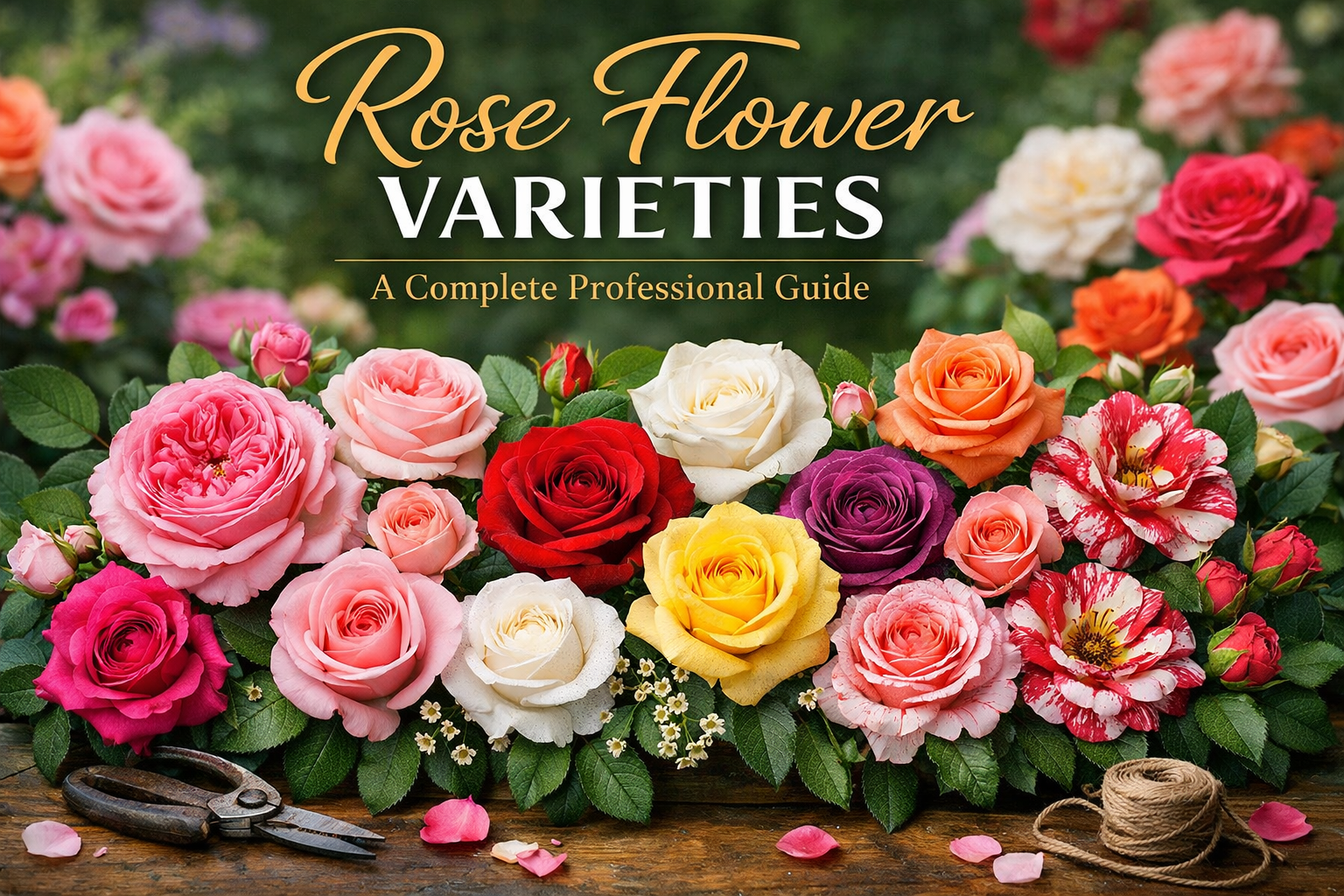
Roses are one of the most beloved and iconic flowers in the world. Known for their stunning beauty, enchanting fragrance, and symbolic meanings, roses have been cultivated for centuries. Whether for gardens, bouquets, or landscaping, understanding the different rose flower varieties can help you choose the perfect type for your needs. This guide explores the various types of roses, their characteristics, and tips for growing them successfully.
Introduction to Roses
Roses belong to the genus Rosa, which consists of over 300 species and thousands of cultivars. They are native to regions in Europe, Asia, and North America. Roses are celebrated not only for their aesthetic appeal but also for their cultural and symbolic significance. From love and romance to friendship and remembrance, each rose carries a meaning, making them a popular choice for gifts and special occasions.
Major Types of Roses
Roses are broadly classified into several categories based on growth habits, flower shapes, and blooming patterns. Understanding these categories can help gardeners and florists select the ideal variety for their purposes.
1. Hybrid Tea Roses
Hybrid Tea roses are perhaps the most famous type of rose, often associated with classic, long-stemmed blooms used in floral arrangements. These roses are known for:
- Large, well-formed flowers: Single blooms per stem make them perfect for bouquets.
- Variety of colors: Available in red, pink, white, yellow, and multi-colored varieties.
- Continuous blooming: They bloom repeatedly throughout the growing season.
2. Floribunda Roses
Floribunda roses are prized for their clusters of flowers and vibrant colors. They are a cross between hybrid teas and polyantha roses. Key features include:
- Clustered blooms: Each stem produces multiple flowers.
- Compact growth: Suitable for garden borders and mass plantings.
- Vivid colors: Floribundas often offer bright and striking color options.
3. Grandiflora Roses
Grandiflora roses combine the qualities of hybrid teas and floribundas, offering large blooms in clusters. Characteristics include:
- Tall and elegant growth: Ideal for vertical garden spaces.
- Showy flowers: Large blooms often appear at the tips of long stems.
- Extended blooming period: They bloom multiple times during the season.
4. Climbing Roses
Climbing roses are perfect for vertical landscaping, walls, fences, and trellises. These roses are known for:
- Long, flexible canes: Can be trained to grow on supports.
- Abundant blooms: Produce flowers in profusion throughout the growing season.
- Variety of colors and fragrances: Many climbing roses are highly fragrant.
5. Shrub Roses
Shrub roses, also called landscape roses, are ideal for creating natural hedges or low-maintenance gardens. Features include:
- Dense, bushy growth: Perfect for borders and screens.
- Disease resistance: Many modern shrub varieties are hardy and low-maintenance.
- Continuous blooming: Provide seasonal color and texture.
6. Miniature Roses
Miniature roses are compact versions of larger rose types, ideal for small gardens, containers, and indoor decoration. Key attributes:
- Small flowers and foliage: Typically under 6 inches in height.
- Versatile planting: Suitable for pots, patios, and indoor spaces.
- Color variety: Available in nearly every rose color.
7. Old Garden Roses
Old Garden Roses, also called heritage or antique roses, are traditional varieties that existed before the introduction of hybrid teas. They are valued for:
- Rich fragrance: Many old garden roses are intensely scented.
- Classic flower forms: Elegant, often multi-petaled blooms.
- Hardiness: They are typically resilient and well-suited to various climates.
Tips for Growing Roses
Growing roses successfully requires attention to soil, sunlight, watering, and pruning. Here are some professional tips:
- Choose the right location: Roses need at least 6 hours of sunlight daily.
- Use well-drained soil: Roses prefer loamy soil enriched with organic matter.
- Water deeply and regularly: Keep the soil moist but avoid waterlogging.
- Fertilize appropriately: Use a balanced rose fertilizer during the growing season.
- Prune for health and shape: Remove dead or weak stems and shape plants for better airflow.
- Protect from pests and diseases: Monitor for common issues like black spot, aphids, and powdery mildew.
Popular Rose Colors and Their Meanings
- Red Roses: Love, passion, and respect.
- Pink Roses: Gratitude, grace, and admiration.
- White Roses: Purity, innocence, and new beginnings.
- Yellow Roses: Friendship, joy, and cheerfulness.
- Orange Roses: Enthusiasm and fascination.
- Lavender Roses: Enchantment and love at first sight.
Conclusion
Roses remain timeless flowers that add beauty, fragrance, and elegance to any setting. With countless varieties to choose from—from hybrid teas and floribundas to climbing and miniature roses—there is a perfect rose for every garden, bouquet, or occasion. By understanding the characteristics and care requirements of different rose varieties, gardeners and enthusiasts can cultivate healthy, vibrant roses that will bloom season after season.