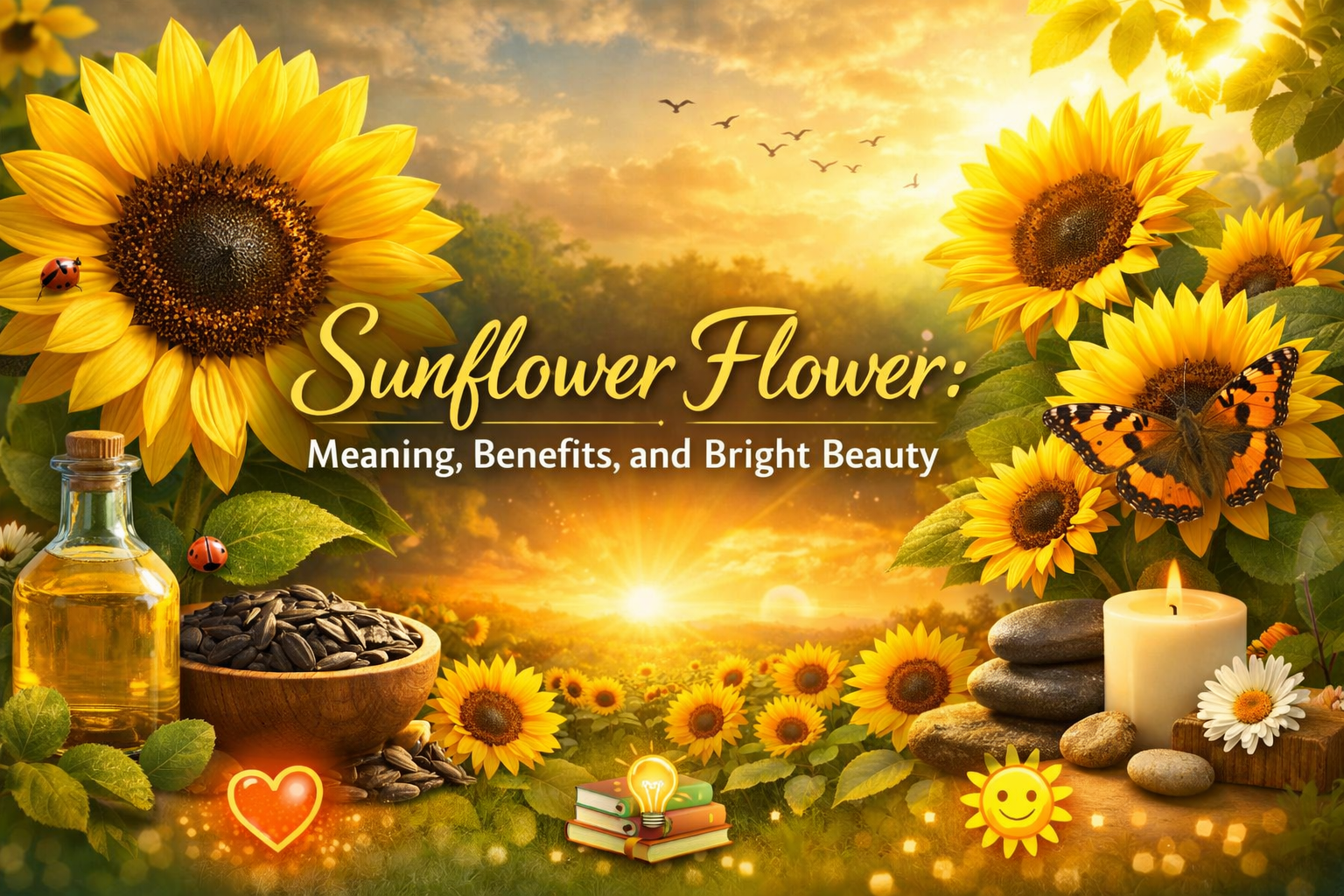
The sunflower flower is one of the most recognizable and loved flowers in the world. Known for its vibrant yellow petals and tall, confident stance, the sunflower symbolizes positivity, warmth, and strength. Beyond its striking appearance, the sunflower also offers numerous benefits, from health and nutrition to environmental and cultural importance. This SEO-friendly article explores the meaning, benefits, and bright beauty of the sunflower flower in detail.
Meaning and Symbolism of the Sunflower Flower
The sunflower has deep symbolic meaning across different cultures and traditions. One of its most powerful traits is its natural tendency to turn toward the sun, a phenomenon known as heliotropism. Because of this, the sunflower is often associated with loyalty, faith, and unwavering devotion.
In many cultures, the sunflower represents happiness, optimism, and hope. Its bright yellow color is linked to joy, energy, and mental clarity. In spiritual symbolism, the sunflower is seen as a sign of positivity and personal growth, reminding people to always look toward the light even during difficult times.
In ancient civilizations, especially among Native American cultures, sunflowers were considered sacred plants. They symbolized harvest, abundance, and nourishment. In modern times, sunflowers are commonly gifted to express admiration, friendship, and encouragement.
The Bright Beauty of the Sunflower
The beauty of the sunflower lies in its simplicity and boldness. With its large circular face and radiant petals, it resembles the sun itself. Sunflowers can grow impressively tall, often reaching heights of six to ten feet, making them a striking presence in gardens and landscapes.
The contrast between the golden petals and the dark brown center creates a visually pleasing effect that instantly draws attention. Sunflowers bloom during summer, filling fields and gardens with warmth and brightness. Their cheerful appearance has inspired artists, photographers, and designers for centuries.
Sunflowers are also popular in home décor, floral arrangements, and events due to their fresh and uplifting look. Whether used in weddings, festivals, or everyday decoration, sunflowers add a natural charm that few flowers can match.
Health Benefits of Sunflower Seeds
While the sunflower flower itself is admired for its beauty, its seeds offer impressive health benefits. Sunflower seeds are rich in essential nutrients and are widely used as a healthy snack and ingredient in various dishes.
Sunflower seeds are an excellent source of vitamin E, a powerful antioxidant that supports skin health and boosts the immune system. They also contain magnesium, which helps maintain healthy muscles, nerves, and bones. Regular consumption of sunflower seeds may help reduce inflammation and support heart health.
Additionally, sunflower seeds provide healthy fats, protein, and fiber. These nutrients help improve digestion, maintain energy levels, and support overall wellness. Including sunflower seeds in a balanced diet can contribute to better cardiovascular health and improved metabolism.
Sunflower Oil and Its Uses
Sunflower oil is another valuable product derived from the sunflower plant. It is widely used in cooking due to its light flavor and high smoke point. Sunflower oil is rich in unsaturated fats, making it a heart-friendly alternative to many traditional cooking oils.
Beyond culinary use, sunflower oil is also popular in skincare and haircare products. Its moisturizing properties help nourish dry skin and improve hair strength and shine. Because it is gentle and non-greasy, sunflower oil is suitable for sensitive skin and is often used in natural beauty treatments.
Environmental and Agricultural Benefits
Sunflowers play an important role in agriculture and environmental sustainability. They are relatively easy to grow and adapt well to different soil conditions. Farmers often grow sunflowers as part of crop rotation to improve soil health.
Sunflowers are also beneficial for pollinators. Bees, butterflies, and other insects are attracted to sunflower blooms, supporting biodiversity and healthy ecosystems. Additionally, sunflowers have been used in environmental cleanup projects because they can absorb toxins and heavy metals from the soil, a process known as phytoremediation.
Their seeds also serve as food for birds and wildlife, making sunflowers an important part of the natural food chain.
Cultural and Artistic Importance
The sunflower has a strong presence in art, literature, and popular culture. One of the most famous examples is the series of sunflower paintings by Vincent van Gogh, which celebrate the flower’s vivid color and emotional depth. These artworks helped make the sunflower a global symbol of creativity and expression.
In literature and poetry, sunflowers are often used as metaphors for resilience, hope, and the pursuit of happiness. Their ability to stand tall and face the sun has made them a symbol of strength and perseverance.
Sunflowers in Everyday Life
Today, sunflowers are used in many aspects of daily life. From gardening and landscaping to food products and cosmetics, the sunflower continues to be both practical and inspiring. Growing sunflowers at home is simple and rewarding, making them a favorite choice for beginner gardeners.
Sunflowers are also commonly associated with positivity and mental well-being. Their bright appearance can lift moods and create a calming, cheerful atmosphere in homes and workplaces.
Conclusion
The sunflower flower is much more than a beautiful bloom. It carries deep symbolic meaning, offers valuable health and environmental benefits, and adds warmth and brightness wherever it grows. From its golden petals that follow the sun to its nutritious seeds and versatile oil, the sunflower truly lives up to its reputation as a symbol of positivity and abundance. Whether admired in a field, used in art, or enjoyed as part of a healthy lifestyle, the sunflower remains one of nature’s most cherished gifts.