Flowers have always held a special place in human culture. From celebrations and weddings to home décor and gifting, flowers express emotions that words often cannot. Today, buyers have more choices than ever, especially when deciding between fresh flowers and artificial flowers. Each option has its own charm, benefits, and ideal use cases. This ultimate guide will help you understand the differences, advantages, maintenance tips, and best uses of fresh and artificial flowers so you can make the right choice for your needs.
Understanding Fresh Flowers
Fresh flowers are natural blooms harvested from plants and admired for their beauty, fragrance, and vibrant colors. Roses, lilies, sunflowers, orchids, and tulips are among the most popular choices worldwide.
Benefits of Fresh Flowers
One of the biggest advantages of fresh flowers is their natural beauty. Their soft petals, organic textures, and pleasant fragrance create an authentic and uplifting atmosphere. Fresh flowers are also known to have a positive impact on mood, reducing stress and promoting emotional well-being.
Fresh flowers are ideal for:
- Weddings and special ceremonies
- Romantic gestures and personal gifting
- Religious and cultural events
- Seasonal decorations
Drawbacks of Fresh Flowers
Despite their beauty, fresh flowers have a limited lifespan. They usually last only a few days to a week, depending on the type and care. They also require regular maintenance, such as changing water, trimming stems, and keeping them away from direct heat or sunlight. Additionally, fresh flowers can be more expensive over time, especially for frequent use.
Tips to Make Fresh Flowers Last Longer
To extend the life of fresh flowers:
- Trim stems at an angle before placing them in water
- Use clean vases and fresh water
- Remove leaves below the waterline
- Keep flowers away from direct sunlight and heat
- Add flower food or a small amount of sugar and vinegar
Understanding Artificial Flowers
Artificial flowers are man-made replicas crafted from materials such as silk, plastic, latex, or foam. Modern artificial flowers are designed to closely resemble real blooms, making them a popular alternative for long-term decoration.
Benefits of Artificial Flowers
The biggest advantage of artificial flowers is their longevity. They do not wilt, fade quickly, or require water and sunlight. This makes them a cost-effective and low-maintenance solution for home décor and commercial spaces.
Artificial flowers are ideal for:
- Home and office decoration
- Hotels, restaurants, and retail spaces
- People with allergies to pollen
- Long-term or permanent displays
They are also available year-round, regardless of season, and come in a wide range of colors and styles.
Drawbacks of Artificial Flowers
While artificial flowers have improved significantly in quality, they still lack the natural fragrance and emotional impact of fresh flowers. Cheaper options may look unrealistic, and over time, artificial flowers can collect dust if not cleaned regularly.
Care Tips for Artificial Flowers
Maintaining artificial flowers is simple:
- Dust them regularly using a soft cloth or brush
- Wash gently with water and mild soap if needed
- Keep them away from direct sunlight to prevent fading
- Store carefully when not in use
Fresh vs Artificial Flowers: Key Differences
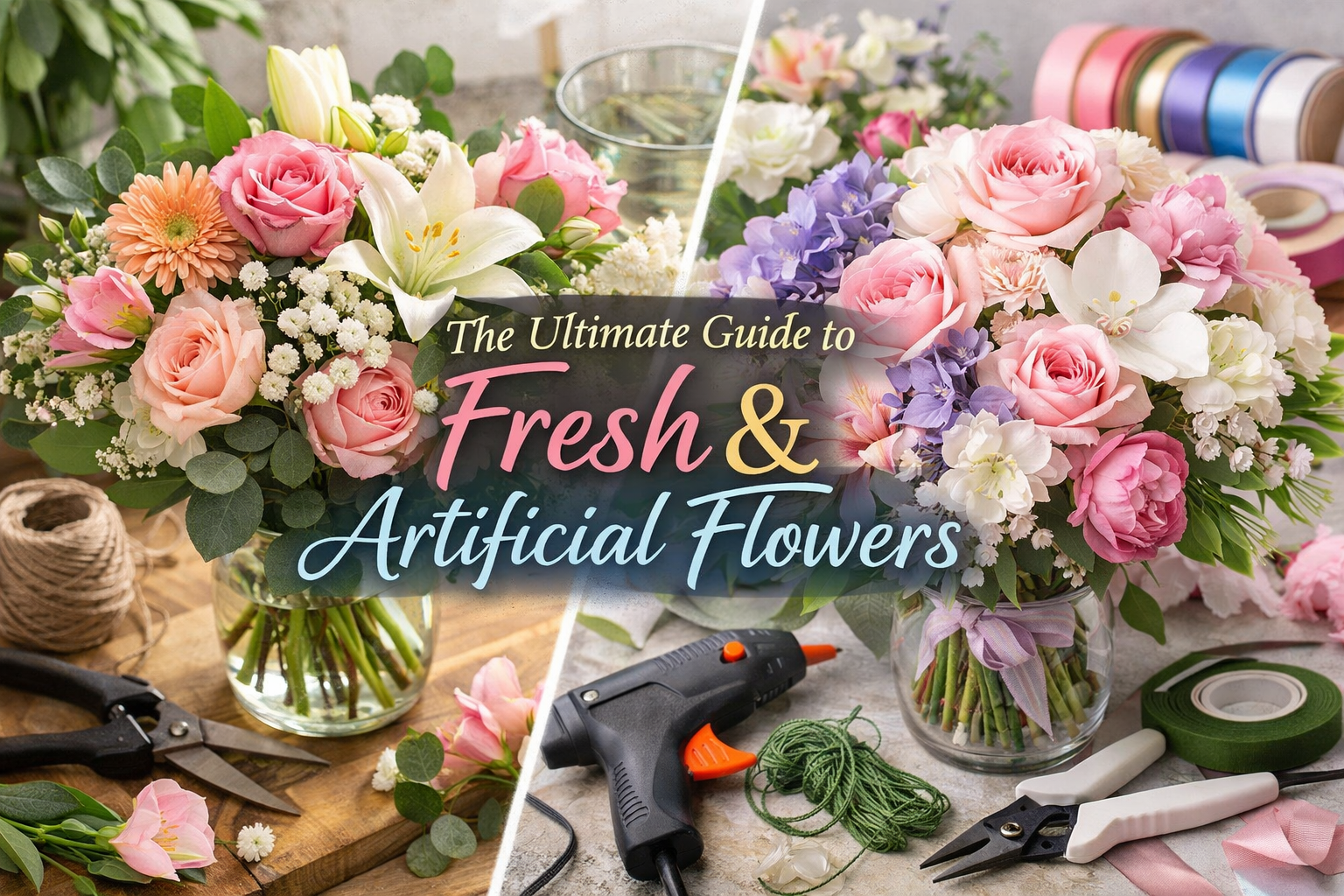
When choosing between fresh and artificial flowers, it’s important to consider your purpose, budget, and lifestyle.
Fresh flowers offer unmatched authenticity, fragrance, and emotional value but require care and frequent replacement. Artificial flowers, on the other hand, provide durability, convenience, and long-term savings with minimal upkeep.
If you want a natural and heartfelt touch for a special moment, fresh flowers are the best choice. If you need a lasting decorative solution with little effort, artificial flowers are more practical.
Best Uses for Fresh Flowers
Fresh flowers work best in situations where emotional impact and natural beauty matter most. They are perfect for weddings, anniversaries, birthdays, and festive occasions. Fresh flowers are also widely used in religious rituals and as thoughtful gifts that convey love, sympathy, or appreciation.
Seasonal fresh flowers can enhance home décor, bringing nature indoors and creating a refreshing atmosphere.
Best Uses for Artificial Flowers
Artificial flowers are excellent for long-term decoration. They are commonly used in offices, hotels, hospitals, shopping malls, and homes where maintenance time is limited. Artificial flowers are also ideal for outdoor decorations in areas where real plants may not survive.
They are a smart choice for people who travel frequently or want consistent décor without worrying about wilting flowers.
Environmental Considerations
Fresh flowers are biodegradable and eco-friendly when sourced responsibly, but frequent purchasing can increase carbon footprint due to transportation and packaging. Artificial flowers are reusable and reduce repeated purchases, but they are often made from non-biodegradable materials.
A balanced approach, such as using fresh flowers for special occasions and artificial flowers for permanent décor, can be both practical and environmentally mindful.
How to Choose the Right Option
Ask yourself a few key questions:
- Is this for a short-term event or long-term decoration?
- Do you have time for maintenance?
- Is fragrance important?
- What is your budget?
Your answers will guide you toward the right choice. Many people today combine both fresh and artificial flowers to enjoy the benefits of each.
Final Thoughts
Both fresh and artificial flowers have unique advantages that suit different needs and lifestyles. Fresh flowers bring natural beauty, fragrance, and emotional depth, while artificial flowers offer durability, convenience, and versatility. Understanding their differences helps you make informed decisions for décor, gifting, and celebrations.
Whether you choose the timeless charm of fresh blooms or the lasting elegance of artificial flowers, the right choice will always enhance your space and express your feelings beautifully.